
Why a US Casino’s Baccarat Table Closes During Major Sports Events
Baccarat tables in US casinos get shut down during major sports events because the floor’s table game yield optimization model detects a demand inversion that no pit boss can ignore. The velvet rope drops, the dealer is reassigned, and the felt gets covered in minutes. This is not superstition. It is cold, hard floor economics driven by data that most players never see.
The Real Reason: Yield Per Square Foot Collapses
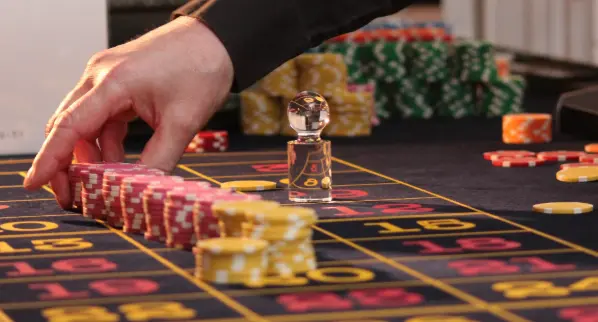
Every square foot of a US casino floor is engineered to produce a benchmark revenue figure per hour. Baccarat is a high-roller magnet, but during a major sports event, the sportsbook handle explodes while baccarat play flatlines. The pit boss runs the numbers: a baccarat table holding six players at a $100 minimum generates less hourly yield than the same footprint converted to standing-room sports bettors hammering parlays and live lines. The table gets closed because the floor is being rebalanced toward the highest-yield activity. It is brutal, it is fast, and it is purely mathematical. 💰
Whale Migration and the Reassignment Algorithm
High-limit baccarat players do not vanish during a Super Bowl or a March Madness run. They migrate. The casino’s player tracking system flags them the moment their card swipes at a sports betting kiosk or a VIP lounge screen. The baccarat table is closed not because the players are gone, but because they are momentarily reclassified. Those same whales are now generating sportsbook revenue, and the casino does not want them distracted by a slow baccarat shoe. The table closure is a soft nudge, a physical signal that the floor’s attention has shifted. Dealers are reassigned to sportsbook cashier stations or to higher-traffic table games like blackjack where the hold percentage is more predictable.

Dealer Labor and Surveillance Bandwidth
Baccarat requires a dedicated dealer, a call person in high-limit rooms, and a surveillance camera feed that is monitored with extreme scrutiny because of the game’s high chip value. During a major sports event, surveillance bandwidth is pulled toward the sportsbook, where live betting disputes and large cash transactions spike. Keeping a baccarat table open during a lopsided game means tying up a dealer, a supervisor, and a camera feed for a product that is not pulling its weight. The floor manager makes the call: shut the table, redeploy the dealer, and free the surveillance channel. It is a resource allocation decision executed in real time, and it happens faster than any player can protest.
The Optics and the Comp Economy
There is also a psychological layer. Casinos do not want a nearly empty baccarat table visible during a major sports event because it signals a lack of action. Empty tables kill the vibe. Closing the table and draping it with a cover is cleaner optics than letting it sit idle. Meanwhile, the comp economy shifts: free bets, drink tickets, and sportsbook credits replace baccarat comps for that window. The table closure is a choreographed part of the casino’s floor yield management playbook, and it is timed to the minute the sportsbook handle peaks. 🎯
When the Table Comes Back
The table reopens the moment the sportsbook handle drops below the baccarat yield threshold. The dealer returns, the felt gets uncovered, and the shoe is reshuffled. The entire cycle is logged, timestamped, and analyzed for the next event. No sentiment, no loyalty, just the cold arithmetic of revenue per hour per square foot. The baccarat table closes because the numbers say so, and in a US casino, the numbers always win.